
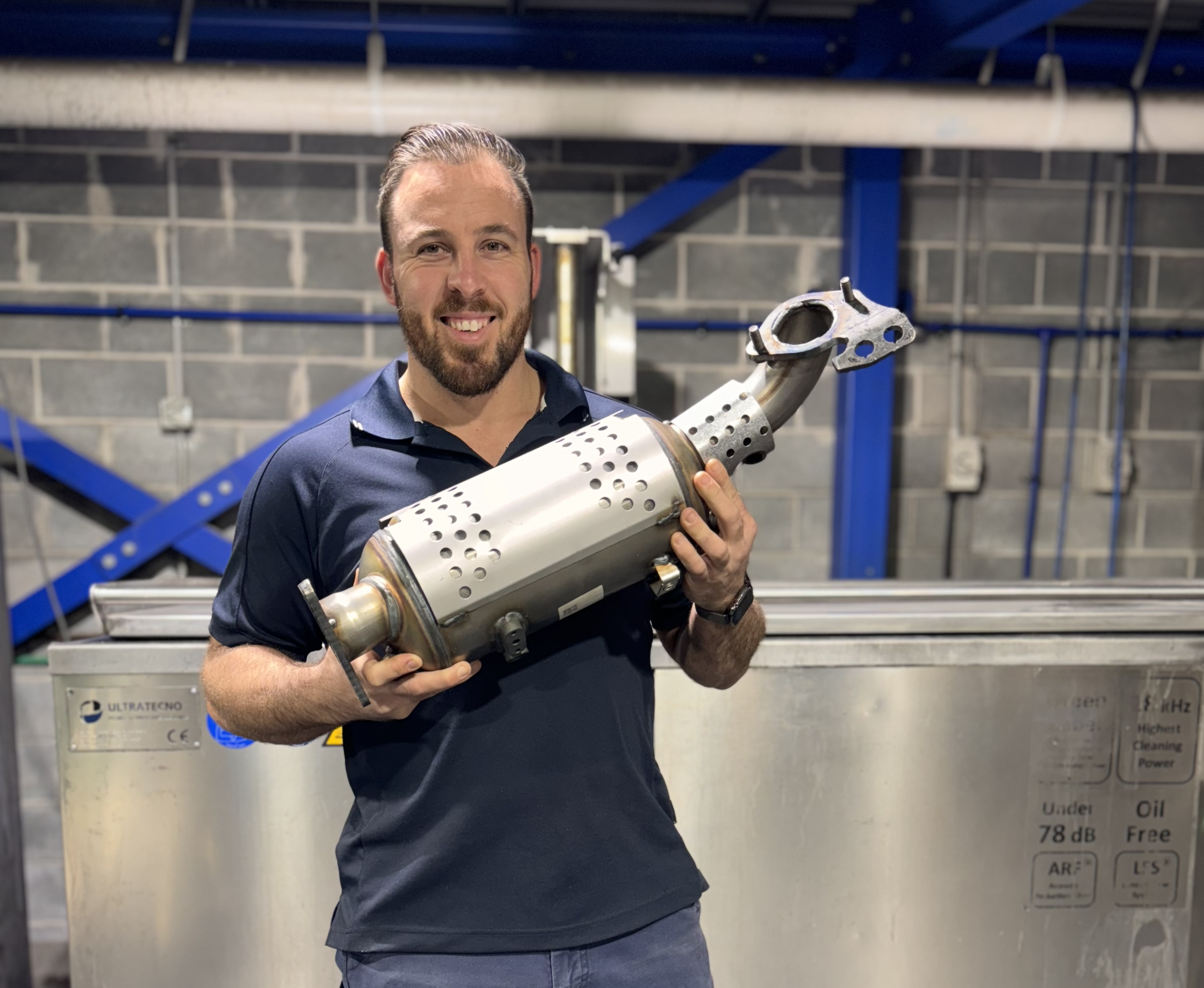
DPF HQ (formerly DPF Regen) is ready to face the problem, are you?
Diesel Particulate Filters (DPFs) have been mandatory in Australia since 2008, but the lack of education around the system has become a source of confusion, frustration and legal ramifications.
DPFs were created to resolve the environmental impact of particulate matter in the atmosphere by capturing carbon and soot from the engine’s exhaust and capturing it inside the filter. The problem with this solution: even a filter needs to be cleaned. And that’s what has not been communicated effectively.
As a result of this lack of education, we have consumers spending exorbitant amounts of money to have their DPF replaced or in worse scenarios, having to completely replace their car; and technicians unknowingly using the scan tools to perform multiple on-vehicle forced regenerations, (which leads to destroying the DPF). Or even using computer programming to perform illegal actions like DPF delete.
Why is particulate matter a concern?
Particulate matter is defined as microscopic solids or liquids (finer than sand or hair). From a diesel engine, this particulate matter includes a mixture of gases, chemicals and solids that are produced during the operation of a vehicle.
The Australian Bureau of Statistics (ABS) recorded more than five million diesel vehicles in the country. That is more than a quarter of the vehicles that exist in the country producing matter that has been proven to have detrimental impacts on human cardiovascular systems and the environment.
For humans, the inhalation of particulate matter increases the risk of heart attacks, decreased liver function and overall breathing ability.
The environmental impact is great, with studies showing damage to soil, farming crops and nutrient imbalance in coastal waters and rivers.
How can the automotive industry help?
While we can’t change the past, we can impact the future. As mechanics, diagnostic technicians and vehicle repairers, we may be at the reactive end of the cycle but we are not incapable of impact.
It is our responsibility to uphold the standards in vehicle care through upskilling our workforce and utilising the technology available to us in the right way.
According to the Edelman Trust Barometer Global Report, trust in the Automotive Industry increased to 69% in 2024. This means we are doing an amazing job at flipping the historically negative perception of our industry. It means, we are at the peak of opportunity to educate our consumers in sustainable vehicle maintenance and repair.
Technology-enabled sustainable solutions
Ensuring DPFs are cleaned at the regular recommended intervals will help the filters not only do their job but ensure customers are saving money and increasing our value to them.
Unfortunately, on-vehicle cleaners cause further damage to the DPF and emit more toxic chemicals out of the exhaust pipe and into the environment. These additives will not result in the sustainable outcome we are looking to achieve as an industry.
That’s why DPF HQ recommends the use of technology to resolve DPF issues.
A sustainable approach starts with an accurate diagnosis. Without getting to the root cause of the issue, the solution will be flawed.
Here are some first steps in diagnosis:
- Scan the vehicle and extract the fault codes
- Pay close attention to fill levels and back pressure of the DPF
- Check oil levels and dilution
- Check for turbo intercooler leaks, split hoses or turbo related issues etc.
- Remove accessible parts of the air intake system to check for excessive carbon/soot build up in the inlet manifold, Exhaust Gas Recirculation (EGR) Valve and/or EGR Cooler.
Ask your customer:
- What’s their typical driving frequency and distances?
- When was the last time they had a repair and what was it?
- Have they noticed noise, smoke etc?
Now you can determine the best approach.
If cleaning is the best approach, at DPF HQ, we employ a repeatable method, called ultrasonic cleaning. Our non-caustic solution ensures the DPF and other engine components are returned to near-new condition and able to be refitted.
A united industry
Finally, knowledge share is imperative to driving the future of our industry. Capricorn’s latest Ignition Magazine documented 43% of employers are struggling with a skills shortage. Uplifting that number starts with the people in the industry.
Bryce Spiteri, Director of DPF HQ says: “Together we grow, individually we stagnate.”